Networking Fridays
Low-cost Technology Practices for Ocean Observation
Date
June 16, 2023, 1:00 PM - 2:00 PM UTC
AIR Centre Networking Fridays
More information about the Webinar series hereWatch the Recording
Watch on YouTube ↗
On April 14th, 2023, 1-2:30 PM UTC we will have a special session dedicated to the development of low-cost practices and technologies for ocean observation.
Science faces an accessibility challenge. Although the information is fast becoming available, the experience of science is significantly limited. One approach to solving this challenge is to democratize access to scientific tools. In this session, we will have Lucie Cocquempot presenting the ongoing work of the OBPS Task Team on “Standard Operating Procedures/Best Practices for Coastal Observations in under-resourced countries, issues behind low-tech practices and ongoing considerations on the need to share knowledge. Colomban de Vargas and Gérard Zinzindohoué utilizing examples from past work and a community-driven science framework will share a broader vision of building new tools for frugal oceanography.
This is an Ocean Decade Event.
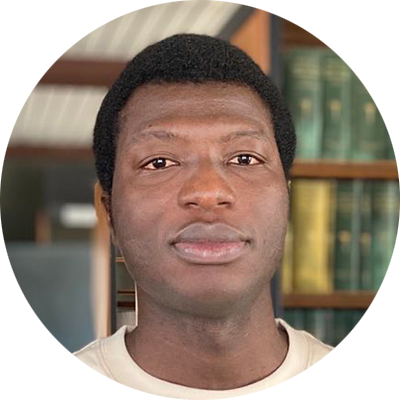
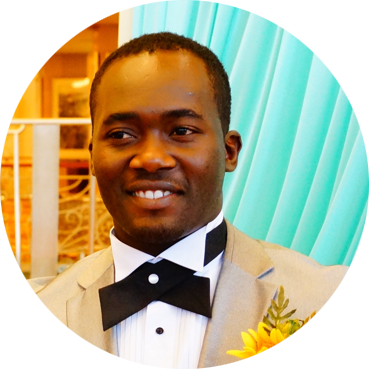
Speakers
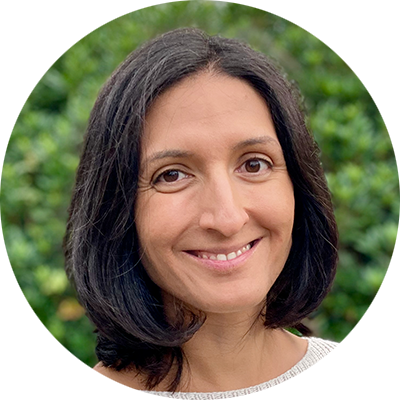
Lucie Cocquempot
Standard Operating Procedures/Best Practices for Coastal Observations in under-resourced countries Lucie is in charge of the coordination of observation networks within the French Research Institute for Exploitation of the Sea (IFREMER) and is a member of the executive boards of several national and European research infrastructures dedicated to the understanding of the oceans. She has recognized skills in leading cross-disciplinary groups, co-construction of observation strategies and marine data management. As an engineer in physical oceanography by training, she has developed an interest in coordinating multidisciplinary systems and participatory sciences, including valorizing indigenous knowledge, low-tech labs and other open science projects. Links:- https://www.oceanbestpractices.org/about/task-teams/task-team-22-01-coastal-observing-in-under-resourced-countries/
- http://www.coastalobsforall.com
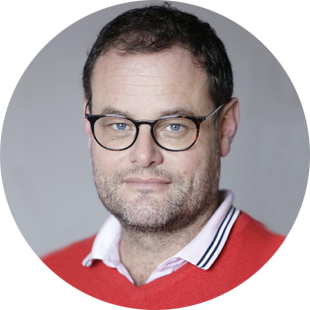
Colomban de Vargas
Plankton Planet: A frugal seatizen measure of aquatic microbiomes for planetary biology After a PhD at the University of Geneva in Switzerland (2000), Colomban de Vargas was a post-doc at Harvard University and Associate Professor at Rutgers University in the USA (2000-2005), before being recruited at the French CNRS, at the ‘Station Biologique de Roscoff’ in 2006. Passionate about the evolution of marine biodiversity in relation to that of the Earth system, Colomban de Vargas has participated in more than 30 oceanographic expeditions, published >150 scientific papers, and (co)led large-scale marine life exploration programs (BioMarKs, Tara Oceans, Oceanomics, Mission Microbiomes, BIOcean5D, Tara EUROPA/TREC). Nowadays director of the GOSEE (Global Ocean Systems Ecology & Evolution, FR2022) Research Federation and the 'Plankton Planet' program, his work contributes to the development of 'planetary biology'.
Gérard Zinzindohoué
Development of low-cost instrumentation for advanced underwater ecology observations Gérard Zinzindohoué holds a BSc in Agronomy, specializing in Animal Production, and an MSc in Fisheries and Aquaculture Management from the University of Abomey-Calavi. After, he obtained a master’s scholarship in Climate Change and Marine Sciences in Cabo Verde from the WASCAL (West African Science Service Centre on Climate Change and Adapted Land Use) Programme. Developing research focused on the Development of Low-cost instrumentation for advanced underwater ecology observations. Gérard has developed the instrument PlasPi TDM, an advanced low-cost synoptic marine ecosystem observation system. Gérard has been a scholar in Observational Oceanography of the Centre of Excellence (NF-POGO CofE) at the Alfred Wegener Institute, Helmholtz Centre for Polar and Marine Research (AWI) in Germany within the framework of the Nippon Foundation – Partnership for Observation of the Global Oceans. During the coursework of this programme, I had the opportunity to work with other Low-cost observational tools such as the Coastal Ocean Dynamics Experiment (CODE) Drifter jointly developed by the Institute National of Oceanography and Applied Geophysics – OGS (Italy) and the Partnership for Observation of the Global Oceans (POGO) within the framework of OpenMODs (Open Access Marine Observation Devices) Project.Moderator