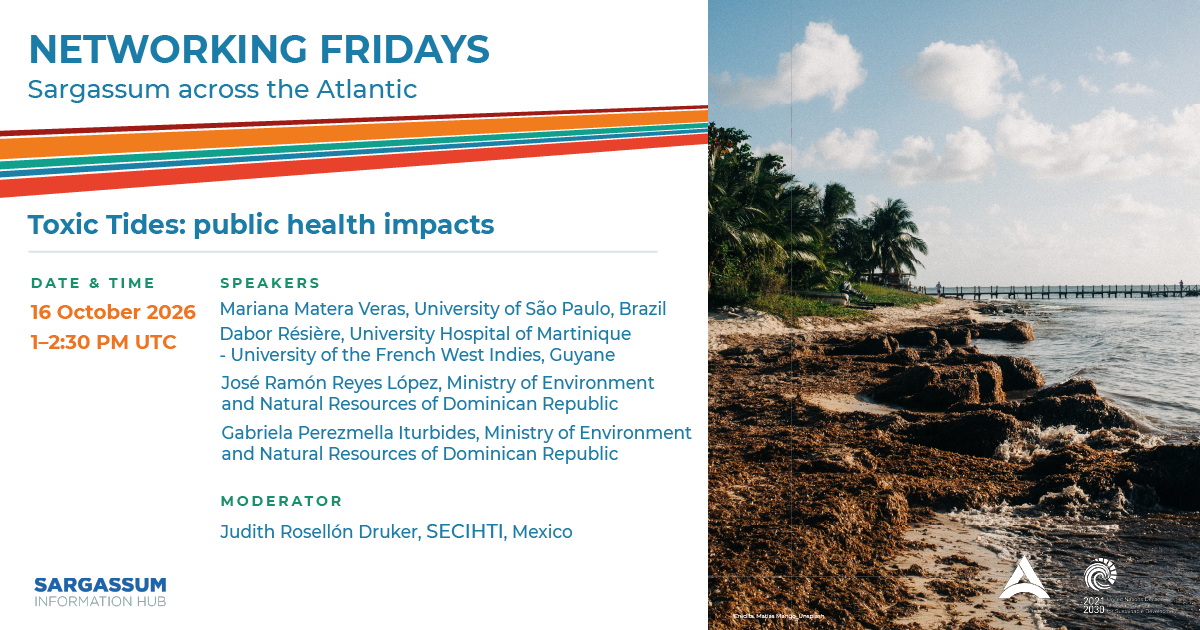
Networking Fridays
Marine Biodiversity Networking Friday with MAELSTROM
Fecha
February 10, 2023, 1:00 PM - 3:00 PM UTC
AIR Centre Networking Fridays
Más información sobre la serie de Webinars aquíVer la Grabación
Ver en YouTube ↗
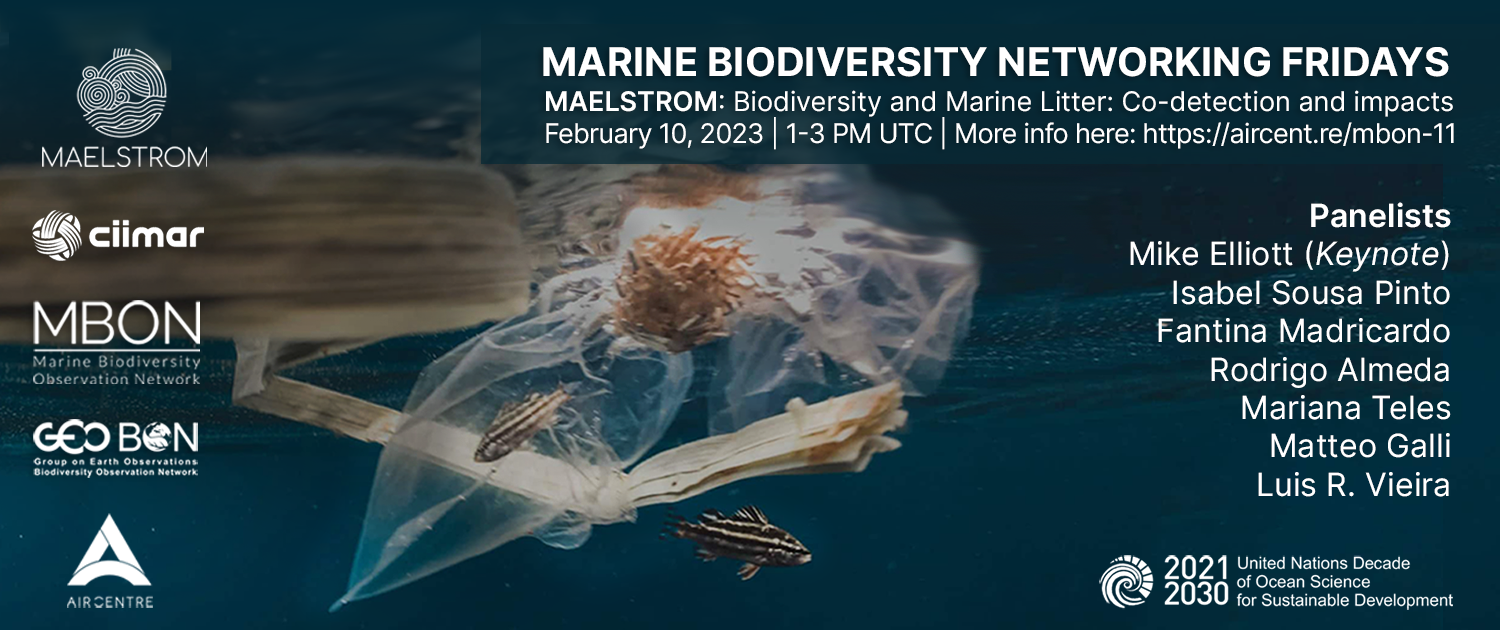
On February 10th, 2023, 1-3 PM UTC we will have the Marine Biodiversity Networking Friday with MAELSTROM, which will be dedicated to marine litter and biodiversity, focusing on current scenarios and future challenges. Marine ecosystems are under intense pressure and in this context, Marine Litter (ML) is considered to be an emerging issue threatening environmental and human health, with more than 11 million tons of litter ending up in our oceans every year. About 80% of all marine debris is plastic, including microplastics that can enter the food chains of marine ecosystems. This results in severe impacts on biodiversity and ecosystem functions and services. Thus, it is urgent to find effective solutions to monitor and remove marine litter from ecosystems, while also reducing plastic consumption by creating awareness and by promoting the adoption of good practices, behaviours and choices, all essential for a sustainable society and future. This is the objective of the MAELSTROM (Smart technology for MARinE Litter SusTainable RemOval and Management) project. Funded by the European Commission, under the H2020 Program, MAELSTROM brings together a consortium of 14 partners from 8 countries with the mission to investigate and implement innovative technologies for the identification, collection, recycling and recovery of marine litter. Parallelly to its scientific and technological core activities, MAELSTROM is also committed to contributing to awareness-raising efforts regarding marine litter impacts, through webinars, clean-up and monitoring, info-days and other events targeting civil society and young generations. The Networking Friday Webinar will focus on a think-tank dedicated to the co-detection and impacts of ML on marine biodiversity. The event is organized by the Interdisciplinary Centre of Marine and Environmental Research of the University of Porto (CIIMAR-UP, Portugal) in partnership with The Atlantic International Research Centre (AIR Centre) and GEO BON Marine Biodiversity Observation Network (GEO BON/MBON). The webinar will be introduced by Isabel Sousa Pinto, Professor at the Faculty of Sciences from the University of Porto (FCUP), MAELSTROM coordinator in CIIMAR-UP and Co-Chair of GEO BON MBON. An integrative keynote on determining ecosystem health using science and policy moving from contamination to pollution per se will be presented by Mike Elliott, Director of International Estuarine & Coastal Specialists (IECS) Ltd and also the Emeritus Professor at the University of Hull (UK). A dedicated session on the co-detection and impacts of marine debris at different marine food web levels, from planktonic drifters to marine mammals, will be moderated by Luis R. Vieira, researcher in the CIIMAR-UP and also an integrated member of the MAELSTROM project. This session will start with how the MAELSTROM project brings new solutions to tackle the Marine Litter issue in coastal areas, linking citizens to science and policy, presented by Fantina Madricardo, staff member researcher at the Institute of Marine Sciences of the National Research Council of Italy (CNR-ISMAR) and the scientific coordinator of MAELSTROM. Rodrigo Almeda, senior researcher at the University of Las Palmas of Gran Canaria (Spain), will present an investigation on the co-detection of microplastics and the effects of plastic additives on marine plankton, including zooplankton and the potential effects on higher food web levels. Mariana Teles, Ramon y Cajal researcher at Universitat Autonoma de Barcelona (Spain), will present an overview dedicated to the effects of nanoplastics in several fish species, and the potential impacts of these nano contaminants on biodiversity. Matteo Galli, a researcher in the Department of Physical Sciences, Earth and Environment, University of Siena (Italy), will talk about the presence and impacts of ML on Mediterranean marine megafauna, including marine turtles and cetaceans, within the Plastic Busters MPAs project. This first session will be followed by a round table, moderated by Isabel Sousa Pinto (FCUP and CIIMAR-UP) as a discussion on how can we improve the detection, reduction and removal of ML in our ocean, including the need for standardization of methodologies, new solutions and effective policies. This event will also contribute to a key project deliverable, dedicated to the Best Practices to be published in the European Environment Agency’s (EEA) database on ML.
Agenda (PM UTC)
1:00 - Welcome and Introduction, Isabel Sousa-Pinto (FCUP and CIIMAR, University of Porto, PT) 01:10 - Keynote | Marine Litter and Microplastics: determining ecosystem health using science and policy moving from contamination to pollution per se, Mike Elliott (University of Hull, United Kingdom) 01:30 - Session | Marine Litter and Biodiversity: Co-detection and impacts. Moderator: Luis R. Vieira (CIIMAR, University of Porto, PT)
- New solutions to tackle the marine litter issue in coastal areas: the MAELSTROM project, Fantina Madricardo (ISMAR-CNR, Italy)
- Plastic additives: a major emerging concern in marine plastic pollution, Rodrigo Almeda (EOMAR-ECOAQUA, University of Las Palmas de Gran Canaria, SP)
- An overview of the effects of nanoplastics in fish, Mariana Teles (Universitat Autònoma Barcelona, SP)
- Presence and impacts of marine litter on Mediterranean marine megafauna within the Plastic Busters MPAs project, Matteo Galli (UNISI, IT)
2:30 - Round-Table: Current scenarios and future challenges. Moderator: Isabel Sousa-Pinto (FCUP and CIIMAR, University of Porto, PT)
3:00 - Closing
This is an Ocean Decade Event.
Speakers
Mike Elliot
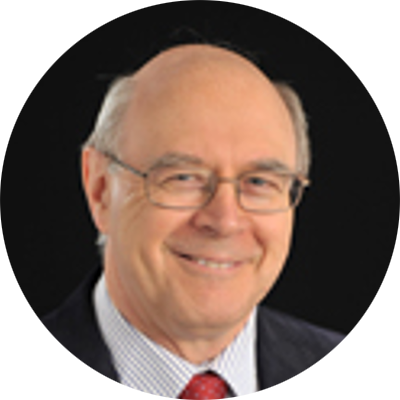
Marine Litter and Microplastics: determining ecosystem health using science and policy moving from contamination to pollution per se Mike is the Director of International Estuarine & Coastal Specialists (IECS) Ltd and also the Emeritus Professor of Estuarine and Coastal Sciences at the University of Hull, UK. He was Director of the former Institute of Estuarine & Coastal Studies (IECS) at the university from 1996-2017. He is a marine biologist with a wide experience and interests and his teaching, research, advisory and consultancy includes estuarine and marine ecology, policy, governance and management. Mike has published widely, co-authoring/co-editing 20 books/proceedings and >350 scientific publications. This includes co-authoring 'The Estuarine Ecosystem: ecology, threats and management' (with DS McLusky, OUP, 2004), 'Ecology of Marine Sediments: science to management' (with JS Gray, OUP, 2009), and ‘Estuarine Ecohydrology: an introduction’ (with E Wolanski, Elsevier, 2015). He was an editor and contributor to the ‘Coasts and Estuaries: the Future’ (Wolanski, Day, Elliott and Ramachandran; Elsevier, 2019), Fish and Fisheries in Estuaries (Whitfield, Able, Blaber & Elliott; Wiley, 2022) and the Treatise on Estuarine & Coastal Science (Eds.-In-Chief - E Wolanski & DS McLusky, Elsevier). He has advised on many environmental matters for academia, industry, government and statutory bodies worldwide. Mike is a past-President of the international Estuarine & Coastal Sciences Association (ECSA) and is now Vice-Chair of Future Earth Coasts and a Co-Editor-in-Chief of the international journal Estuarine, Coastal & Shelf Science; he currently is or has had Adjunct Professor and Research positions at Murdoch University (Perth), Klaipeda University (Lithuania), the University of Palermo (Italy), Xiamen University (China) and the South African Institute for Aquatic Biodiversity. He was awarded Laureate of the Honorary Winberg Medal 2014 of the Russian Hydrobiological Academic Society. Awarded Lifetime Achievement Award of ECSA, September 2022. He is also a member of many national and international committees linking marine science to policy. Mike is one of the highest or among the highest cited author in various journals and years. See also Scopus; Google Scholar; ORCID ID 0000-0002-2519-4871.
Fantina Madricardo
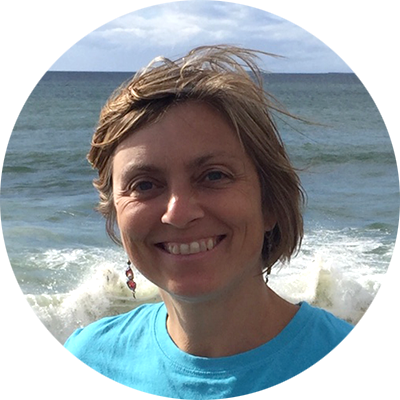
New solutions to tackle the marine litter issue in coastal areas: the MAELSTROM project Fantina Madricardo, laurea (equivalent of MSc) in Physics (1999) University of Padova, PhD in Physics (2002), University of Hamburg, Germany, Post-Doc position (2008) at the Université Pierre et Marie Curie, Paris, France. She is staff member researcher at the CNR-ISMAR since 2012. Her main research topics are applied geophysics and underwater acoustics, focussing on seafloor mapping and geomorphology, and, more recently passive acoustics. She interested in development of methods for semi-automatic classification of multibeam echosounder data for seabed sediment characterization, benthic habitat mapping and seafloor marine litter mapping, geomorphometric analysis of seafloor morphologies and anthropogenic physical change. She was the coordinator of the EASME/EMFF marGnet project and she is currently the project coordinator of the H2020 MAELSTROM, focussing on new technologies to face the marine litter issue. She was the responsible for CNR-ISMAR of the IT-HR Interreg SOUNDSCAPE and still is for the H2020 SATURN focussing on the undewater noise issue. She is also involved in the projects H2020 ENDURUNS, H2020 4S and in the IT-HR Interreg INNOVAMARE developing robotic and satellite solutions for the marine environment observation and the H2020 RELIANCE to support FAIR resarch in EOSC.
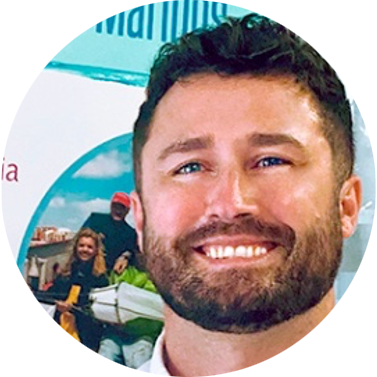
Rodrigo Almeda
Plastic additives: a major emerging concern in marine plastic pollution Rodrigo received his bachelor’s degree in marine biology from the University of La Laguna (extraordinary award for the best academic record) and his PhD in Marine Sciences from University of Barcelona (PhD Extraordinary Award for the best PhD thesis in Ecology). His research interests include marine plankton ecology and the effects of pollution on plankton. He worked as a researcher in the Spanish National Research Council (ICM-CSIC), The University of Texas in Austin and the Technical University of Denmark and has been granted by prestigious research European (Marie Curie) and National (Ramón y Cajal) programmes. Currently, he is the PI of the National Project “MICROPLEACH” and co-PI of the EU JPI Oceans “RESPONSE”, research projects focused on microplastic pollution and the effects of plastic additives and leachates on marine plankton food webs.
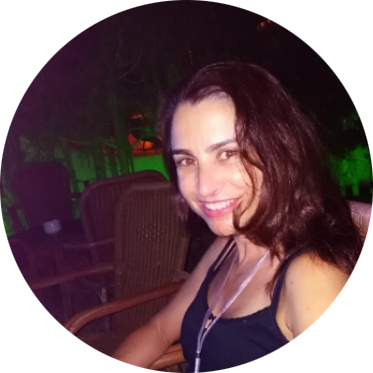
Mariana Teles
An overview of the effects of nanoplastics in fish Mariana Teles is a Ramon y Cajal researcher at Universitat Autonoma de Barcelona, Dpt. Cell Biology, Physiology and Immunology (AQUAB-FISH lab) and Institute of Biotechnology and Biomedicine (Evolutive Immunology group). She investigates the effects of stressors relevant to aquaculture practices on species destined for human consumption, using new models and genomic tools, with special emphasis on neuroendocrine-immune interactions. Her current research scheme focuses on the study of the effects of emergent pollutants, such as nanoplastics, in marine species, using an integrated and multidisciplinary approach. See also orcid.org/0000-0001-5525-4049.
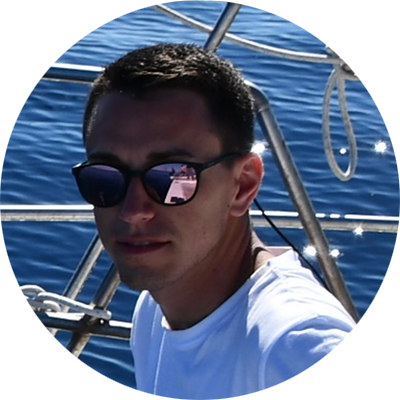
Matteo Galli
An overview of the effects of nanoplastics in fish Matteo Galli is a post-doctoral fellow in the Biomarker Laboratory under the supervision of Prof. Maria Cristina Fossi at the Department of Physical Sciences, Earth and Environment, University of Siena (Italy). The lab has a central position for research on marine litter in the Mediterranean Sea and a key role in the implementation of the EU MSFD at the national level (Descriptors 8 and 10). He received his PhD in Environmental, Geological and Polar sciences and Technologies from the University of Siena in 2022 with a dissertation focused on the assessment of abundance and impacts of marine litter in Mediterranean organisms within the Plastic Busters MPAs Interreg Med Project. He has been a visiting fellow at the Instituto de Investigación Marina (INMAR) (Cadiz, Spain) collaborating with Prof. Andrés Cozar Cabañas in 2017. He has been involved in national and international research projects concerning the evaluation of marine litter presence and distribution in different ecological compartments of the Mediterranean Sea with special attention on the ecotoxicological implications related to litter ingestion in several organisms from invertebrates to marine mammal species.
Moderators
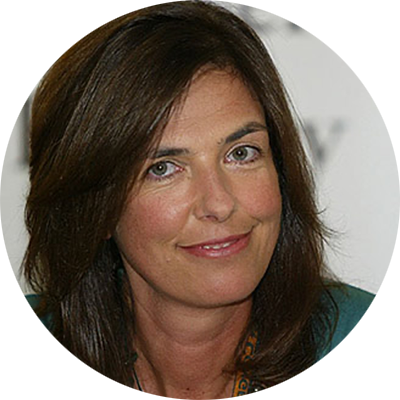
Isabel Sousa Pinto
Isabel Sousa Pinto has a PhD in Marine Biology (phycology) from the UCSB, USA. She is a Professor at the University of Porto and Head of the Aquatic Biodiversity and Conservation group at Interdisciplinary Centre for Marine and Environmental Research (CIIMAR). She is also member of its Board of Directors. Her main research has been on marine biodiversity and ecosystem functioning, and how is impacted by climate change, invasive species and other anthropogenic drivers. She has a particular focus on the seaweed flora as well as on algal ecophysiology, cultivation and promotion of its sustainable use and was member of the POGO working group “Planning the implementation of a global long-term observing and data sharing strategy for macroalgal communities”. She is also working on the science-policy – society interfaces and on promoting ocean literacy. She is serving in different European and International steering Committees as Euromarine, European Ocean Observation System (EOOS) and AtlantOS to develop the biodiversity component of the Ocean Observations and its integration with the other observation components and with the European Marine Board in to identify gaps in biological observations and produce recommendations to fill them. At global level she is the co-chair of MBON – Marine Biodiversity Observation Network from GEO BON. She was part of the Portuguese delegation to the Convention on Biological Diversity (2006-2011) and has been since working with IPBES – the Intergovernmental Panel on Biodiversity and Ecosystem Services, was the Portuguese Representative in this platform until 2018, when was elected to its Multidisciplinary Expert Panel, a panel that supervises the scientific work of the Platform, becoming later also co-chair of its Knowledge and Data task force. Besides more than 180 scientific publications, she was a Coordinating Lead Author for the Regional Assessment of Biodiversity and Ecosystem Services in Europe and Central Asia of IPBES.
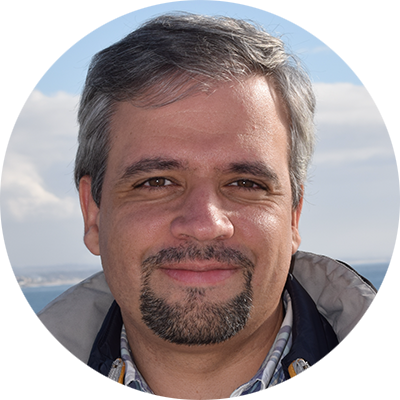
Luis R. Vieira
Luis R. Vieira is a Researcher at the Interdisciplinary Centre of Marine and Environmental Research from the University of Porto (CIIMAR - UP). He graduated in Biology in 2000 (University of Aveiro (UA)), received his MSc in Ecology in 2002 (University of Coimbra (UC)) and completed a PhD degree in Biology in 2009 from the UA. His scientific activities focus on Ecotoxicology and Ecology areas, covering several priority topics, including coastal and estuarine ecology, dynamics and biodiversity, water quality assessment, ecosystems vulnerability, contaminants of emerging concern, combined effects of multiple stressors and climate change on aquatic organisms, and other pressures on coastal ecosystems wildlife. He has developed and coordinated several activities of Science and Society. Luis R. Vieira is also a Researcher in the MAELSTROM project, an international consortium that aims to implement innovative and environmentally sustainable technologies to identify, remove, recycle and integrate marine litter back into the market chain. Luis R. Vieira is the author of several indicators of scientific production, including books, several chapters in international books, research papers and outreach articles and videos, in his area of expertise. We will continue with the Networking Fridays during the next months. More information about future sessions as well as presentations and videos from previous sessions can be found here. Please do not forget to subscribe to our YouTube Channel. Twitter Hashtag: #netfridays. Expect some very exciting mornings, afternoons or evenings, depending on where you are… If you need any additional information please send an email to Jose Luiz Moutinho. Marine Biodiversity Networking Friday with ProtectedSeas. Virgil Zetterlind, Director, and Deirdre Brannigan, Communications and Community Engagement Liaison presented Protected Sea’s work on using regulatory data to inform marine spatial planning efforts.. Marine Biodiversity Networking Friday on Bio-GO-SHIP: Expanding biological ocean observations for plankton ecosystem science and monitoring to the global scale with Luke Thompson (Mississippi State University), Sophie Clayton (Old Dominion University), and Maria Grigoratou (Mercator Ocean International) The Global Ocean Observing System and related activities in the Asia-Pacific region with Karen Evans (CSIRO Oceans and Atmosphere, Tasmania) and Sanae Chiba (PICES). The moderator was Irene Alabia (Arctic Research Center, Hokkaido University, Japan).
Ponentes
Mike Elliot
Fantina Madricardo
Rodrigo Almeda
Mariana Teles
Matteo Galli
Isabel Sousa Pinto
Luis R. Vieira