Networking Fridays
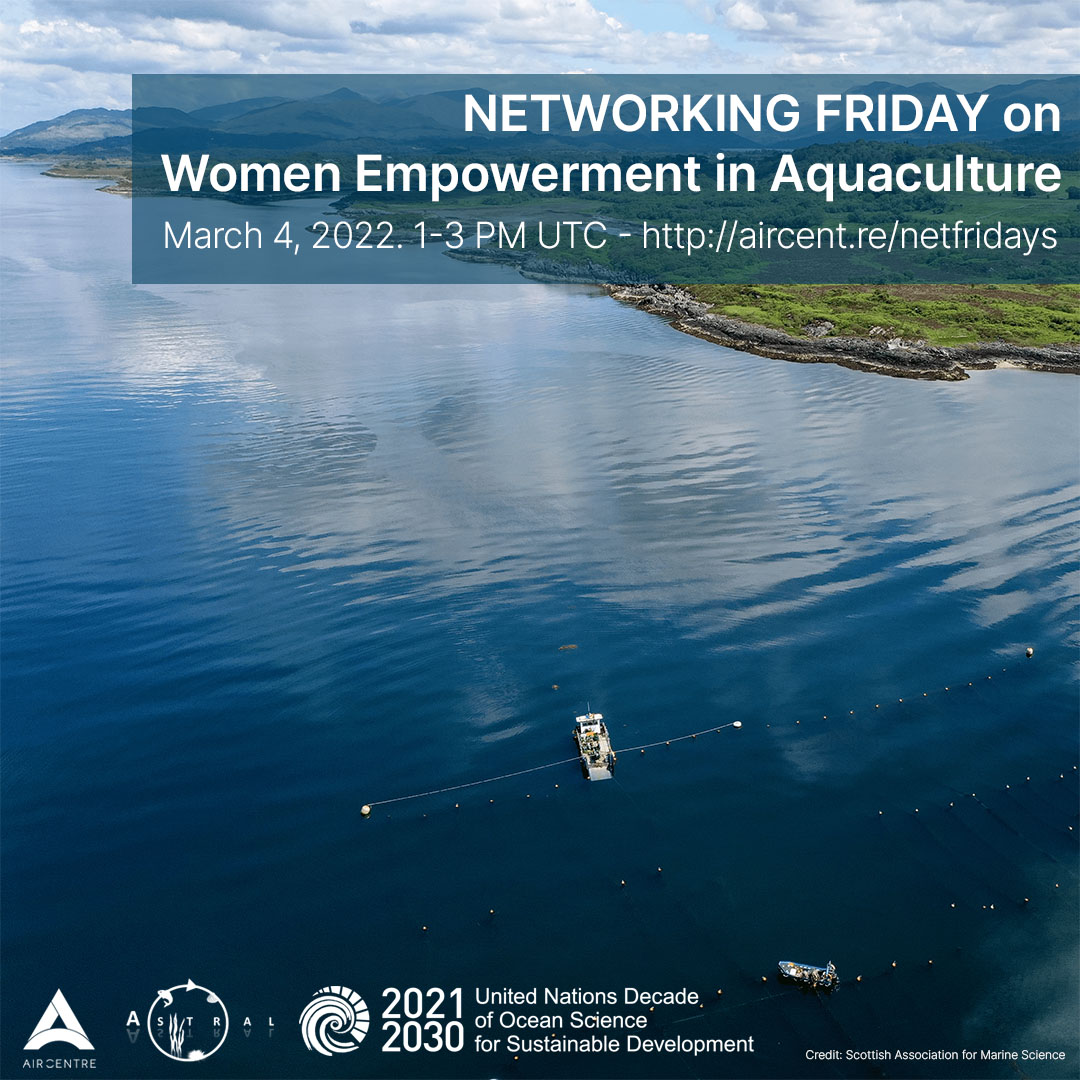
Networking Friday on Women Empowerment in Aquaculture
Date
March 4, 2022, 1:00 PM - 3:00 PM UTC
AIR Centre Networking Fridays
More information about the Webinar series hereWatch the Recording
Watch on YouTube ↗On March 4th, 2022, 1-3 PM UTC, as an early celebration of the International Women’s Day, we will host a dedicated Networking Friday on Women Empowerment in Aquaculture, which was jointly organized with the ASTRAL Project. The panel is filled with brilliant women in aquaculture working on the most diverse sectors, from international NGO to business and industry as well as academia and network organizations. They will share their experiences and inspire us by giving a vision of the challenges and the amazing work they are doing in the Aquaculture sector. We will have Alice Ruhweza, WWF Africa Regional Director, Teresa Garzon, Chair of Women in Scottish Aquaculture (WISA), Scotland, Edna Ferreira Alencar, Professor at Federal University of Pará, Brazil, Liz Johndrow, Seaweed Supply & Advancement Manager at Atlantic Sea Farms and Nurat Atoba, President of the Lagos State Chapter of Catfish Farmers Association of Nigeria discussing Women Empowerment in Aquaculture, a Networking Friday special session jointly organized with ASTRAL project. The moderator will be Marissa Brink-Hull (Post-doc researcher and Ocean Youth Ambassador at University Cape Town).

This project has received funding from the European Union’s Horizon 2020 research and innovation programme under grant agreement No 863034
Agenda:
- 1:00 - Welcome and housekeeping rules by Marissa Brink-Hull, Post-doc researcher and Ocean Youth Ambassador, Univ Cape Town, South Africa
- 1:05 - Keynote Speaker: Alice Ruhweza, WWF Africa Regional Director
- 1:25 - Introduction to Women in Scottish Aquaculture (WISA) - Teresa Garzon, Chair of Women in Scottish Aquaculture (WISA), Scotland
- 1:40 - Artisanal fisherwomen and the conservation of fisheries resources in the Amazon: empowerment, access to income, food security and resilience of artisanal fisheries - Edna Ferreira Alencar, Professor at Federal University of Pará, Brazil
- 1:55 - Fishermen learn to Farm: How Maine's Lobstermen are leading the US seaweed industry by farming kelp in their off season - Liz Johndrow, Seaweed Supply & Advancement Manager, Atlantic Sea Farms, USA
- 2:10 - Capacity Building, Women Empowerment and Mainstreaming into Aquaculture - Nurat Atoba, President of Lagos State Chapter of Catfish Farmers Association of Nigeria
- 2:25 - Discussion
Relevant links:
- All-Atlantic Pledge Women Empowerment in Sustainable Aquaculture
- ASTRAL Project
- Women in Scottish Aquaculture (WiSA)
Speakers
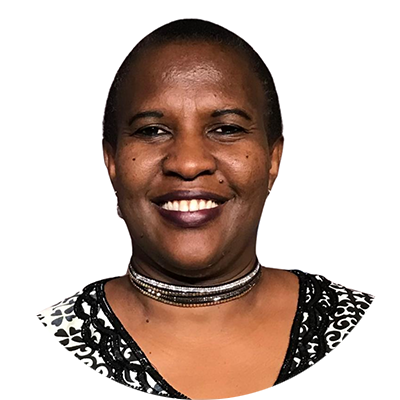
Alice Ruhweza
Keynote Speech Alice is a global thought leader and practitioner with extensive experience working at the intersection of Conservation, Development and the Environment in Africa and globally, fostering successful partnerships with a wide range of international institutions. She is currently the Africa Region Director for the World Wide Fund for Nature (WWF), where she leads and oversees a regional program comprising 10 countries and over 600 staff. There she is leading design of a new conservation framework that brings together work at national, transboundary and global levels, as well as development of a new system of program quality assurance. She sits on the Board of the CGIAR, the Global Ever-Greening Alliance and on the steering committee of the Future Earth Water-Food-Energy Nexus working group. She is also Co-chair of the World Economic Forum Sustainable Aquaculture 2030 working group. Before joining WWF, she was Vice President of Programs and Partnerships with Conservation International, where she oversaw the Vital Signs Program, which provides data and diagnostic tools to help inform agricultural decisions and monitor outcomes around the world. She was also the Team Leader and Technical Adviser for the United Nations Development Programme Global Environmental Finance Unit in Africa. In this role, she led a team supporting 44 countries to attract and drive public and private finance towards their sustainable development priorities. She is an Aspen New Voices Fellow; a Henry Arnhold Conservation Fellow; and a fellow of the Salzburg Global Seminar. She holds an MSc in Agricultural and Applied Economics.
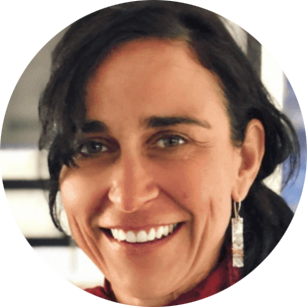
Teresa Garzon
Introduction to Women in Scottish Aquaculture (WISA) Teresa is a professional with twelve years of experience working within the fishery industry in Scotland. She holds a PhD in Biology from the University of Barcelona and has worked in research in both fresh and seawater fish health, salmon production (MOWI), and is now in the supply chain as Key Account Manager for PatoGen Ltd, where they focus on PCRs testing and consultancy in fish health and prevention for salmon producers in Scotland. Tereza is the Chair of Women in Scottish Aquaculture for the last two years. Women in Scottish Aquaculture (WiSA) promotes the diverse and rewarding careers that are available in aquaculture, to encourage more women to enter the sector. It also supports the progression, opportunities and development of women who are already working in aquaculture. This presentation will show how WISA was founded and the activities and impact it has had since then. #DiversityMakesUsWiSA.
Edna Ferreira Alencar
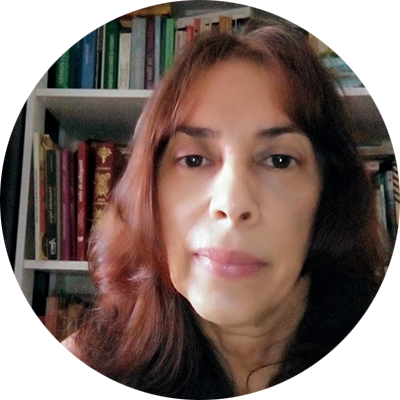
Artisanal fisherwomen and the conservation of fisheries resources in the Amazon: empowerment, access to income, food security and resilience of artisanal fisheries Anthropologist, professor at the Federal University of Pará, at the Graduate Programs in Anthropology (PPGA) and Graduate Studies in Sociology and Anthropology (PPGSA). She has a postdoctoral degree from the Université Sorbonne Nouvelle Paris 3/France and is a collaborating researcher at the Mamirauá Sustainable Development Institute (IDSM/MCTI). She conducted research with a fishing community on the coast of Maranhão state and participated in a project focused on the management of fisheries in the Amazon River basin, with topics on social conflicts and ways of managing fisheries in floodplain lakes. More recently, she has been developing research related to the management of fisheries resources, with a gender approach, on the work of women in fisheries governance and management. She is a CNPQ Research Productivity fellow, developing studies on the "Impacts of fisheries resource management projects on income generation, food security and gender equity in artisanal fisheries in the region of Middle Solimões river, Amazonas". The lecture will highlight the work of fisherwomen in fisheries resource management projects aimed at conserving a freshwater species, the arapaima (Arapaima gigas), in lakes located in the lowland environment of two environmental protection areas: Amanã Sustainable Development Reserve (RDSA) and Mamirauá (RDSA), Middle Solimoes region, state of Amazonas. Objective: to describe the organization of projects, working conditions, challenges and barriers encountered by women to participate in activities; highlight the relevance of these projects for the empowerment of fisherwomen, strengthen their identity as fisherwomen; participation in decision-making on fisheries management and governance actions; highlight the importance of this work in generating income, food security and quality of life; in the conservation of biodiversity, in the sharing of knowledge and techniques that guarantee the resilience of fishing with the involvement of young men and women.
Liz Johndrow
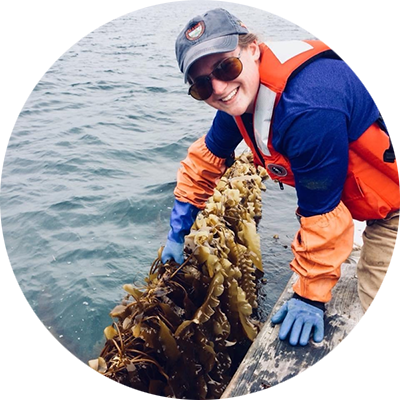
Fishermen learn to Farm: How Maine's Lobstermen are leading the US seaweed industry by farming kelp in their off season Liz has always been in awe of the ocean, feeling her best at the beach, on the dock, or out on the water checking kelp farms and working alongside her husband on his commercial lobster boat. Liz has been farming in the Gulf of Maine since 2016, cultivating native mussels, scallops and kelp through regenerative aquaculture. Liz has collaborated with researchers ranging from Universities to the US Naval Academy and is a published author in multiple scientific journals, presenting her research nationally. At Atlantic Sea Farms, Liz oversees the growing network of farmer partnerships through farmer recruitment, technical assistance in leasing and permitting, on the water hands-on training, along with managing outplant and harvesting logistics for the entire kelp crop. Liz is proud to work for a woman run, vertically integrated, and mission driven company that produces the most delicious and nutritious kelp products, in partnership with Maine’s commercial lobstermen. Fishermen learn to Farm: How Maine’s Lobstermen are leading the US seaweed industry by farming kelp in their off season Atlantic Sea Farms is a women run, mission driven company that partners with commercial lobstermen to farm kelp in the clean, cold waters off the coast of Maine, USA. This partnership is about more than just seaweed, it’s about resilience. The discussion will focus on the coastal communities that are intrinsically linked to the natural environment and how diversification plays a key role to these individuals who depend on the ocean as their way of life.
Nurat Omotayo Atoba
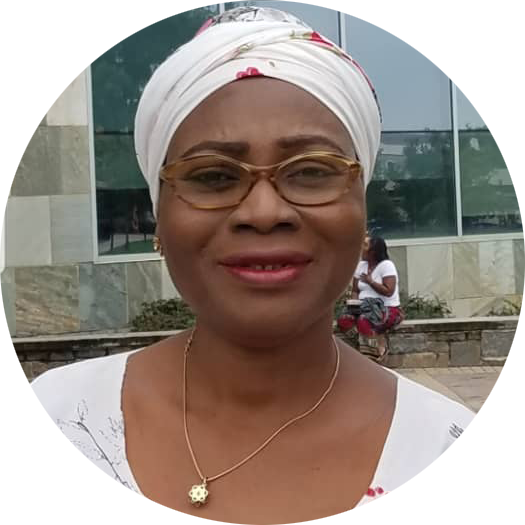
Capacity Building, Women Empowerment and Mainstreaming into Aquaculture Nurat was born 56 years ago. I am a graduate of Food Technology and have post graduate diploma in Management. She worked as a Quality Controller at a manufacturing company before she resigned to establish my own company, B.T. Ventures Ltd and later B.T Farms. Nurat started fish farming in 2005 and engaged in fingerlings production, Grown-out table fish production and fish processing. She is a very successful fish farmer and she have attended courses/seminars in Aquaculture both in Nigeria and Internationally. Presently, Nurat is the President of Lagos State Chapter of Catfish Farmers Association of Nigeria and also acting as the NIOMR-ASTRAL Focal Point Person for women empowerment and mainstreaming into AquacultureWomen generally are more involved in fish processing and marketing in the aquaculture sector in Nigeria and also globally. However there are also many women fish farmers who are owners of large scale aquaculture farms, creating employment, improving family nutrition and very successful. Their success stories are attributed to capacity building, workshops and empowerment targeted at the women folk. ASTRAL HORIZON 2020 Project is focusing on women education, empowerment and mainstreaming into aquaculture which is critical for increased fish production and food security. ASTRAL Project will mobilize more women into aquaculture production, develop programmes that target only women through organization of workshops, fish farm clusters, formation of strong cooperatives to access credits to improve their livelihoods and productivity.
Moderator
Marissa Brink-Hull
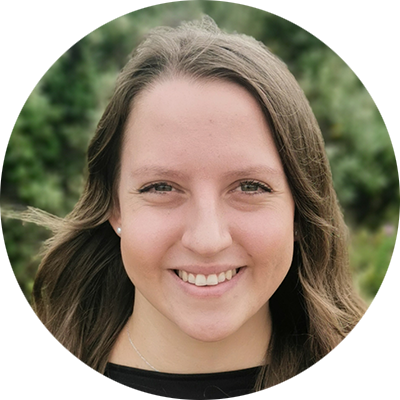
Marissa completed her PhD in Genetics at Stellenbosch University, where she assessed population genetics and bacterial communities of the sea urchin, Tripneustes gratilla, as well as the effect of different diets on reproductive success in these animals. Currently, she is a postdoctoral research fellow in the Department of Biological Sciences at the University of Cape Town, in collaboration with the South African Department of Forestry, Fisheries and the Environment. Her postdoctoral research is on integrated multi-trophic aquaculture (IMTA) for sea urchins and abalone with the seaweed Ulva, with a focus on microbiomes and its implications for animal health. This research forms part of the EU-funded All-Atlantic Ocean Sustainable, Profitable and Resilient Aquaculture (ASTRAL) project that aims to develop and support sustainable aquaculture across the Atlantic. Marissa is also part of the All-Atlantic Ocean Research Alliance Youth Ambassador programme, which aims to raise ocean awareness and promote ocean literacy through various engagements with Atlantic communities. We will continue with the Networking Fridays during the next months. More information about future sessions as well as presentations and videos from previous sessions can be found here. Twitter Hashtag: #netfridays. Expect some very exciting afternoons, or mornings or evenings, depending on where you are… If you need any additional information please send an email to Jose Luiz Moutinho. Networking Friday with Argyro Kavvada (NASA), who reviewed innovative Earth observation solutions for the Sustainable Development Goals. This session was moderated by Samy Djavidnia. Networking Friday Special Thematic Session on Evolving and Sustaining Ocean Best Practices with Jay Pearlman, Pier Luigi Buttigieg, Rachel Przeslawski, Juliet Hermes, and Alison Clausen. this session was moderated by Frank Muller-Karger Networking Friday Special Session on Sargassum with Cesar Toro (IOCARIBE of IOC-UNESCO), Karima Degia (UWI), Sandra Ketelhake (AtlantOS, KDM), Isabel Sousa Pinto (CIIMAR, GEO MBON), and Leah Mupas Segui (GEO Blue Planet Initiative). The moderator was Emily Smail (NOAA, GEO Blue Planet Initiative).
Speakers
Alice Ruhweza
Teresa Garzon
Edna Ferreira Alencar
Liz Johndrow
Nurat Omotayo Atoba
Marissa Brink-Hull