Networking Fridays
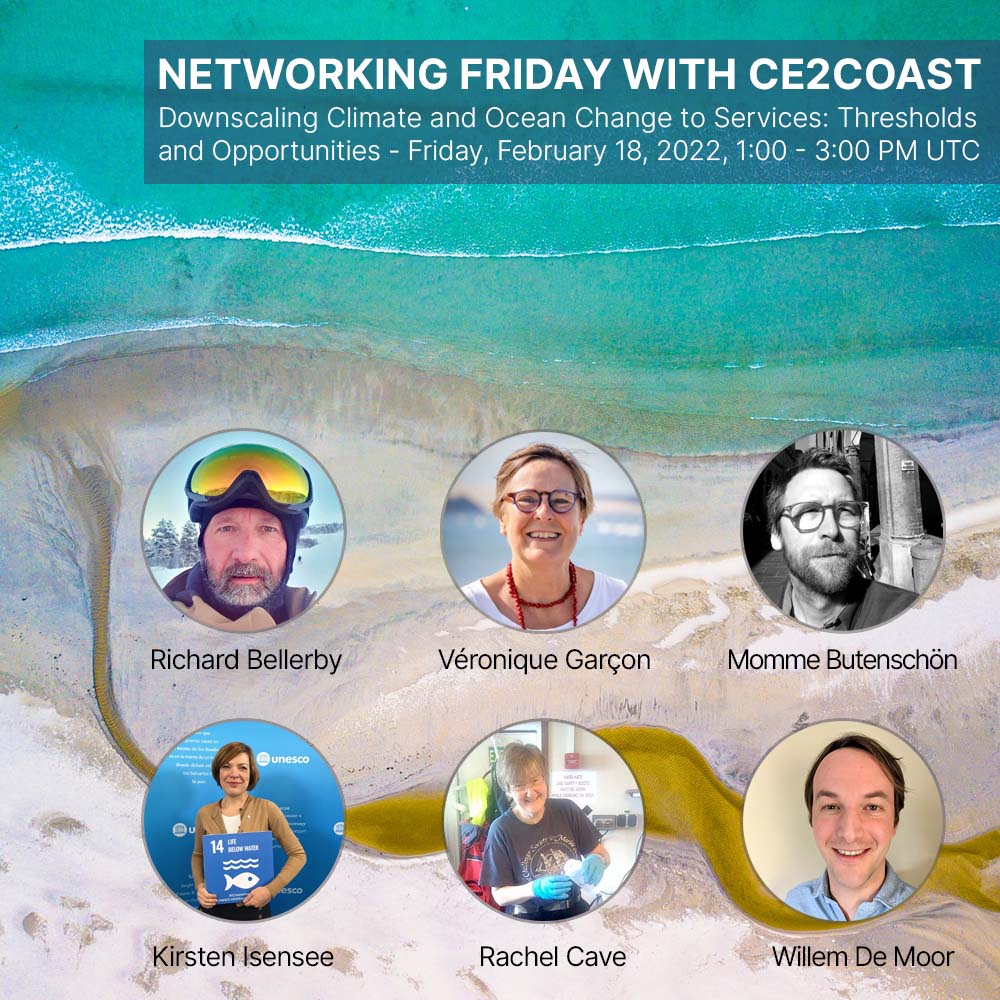
Networking Friday with CE2COAST
Fecha
February 18, 2022, 1:00 PM - 3:00 PM UTC
AIR Centre Networking Fridays
Más información sobre la serie de Webinars aquíVer la Grabación
Ver en YouTube ↗On February 18th, 2022, 1-3 PM UTC we will learn more about the CE2COAST Project: Downscaling Climate and Ocean Change to Services: Thresholds and Opportunities. CE2COAST was funded under the Next Generation Climate Science in Europe for Oceans Joint Call and focuses on oceans and climate, using observations and Earth system models to address global scale climate change challenges. Human-made global change will have significant impacts at regional and coastal scales on marine systems, dependent socioeconomies and ocean services. These can strongly interact with regional and local human-activity-induced pressures such as fishing, pollution, and eutrophication. The challenges of understanding climate and ocean change at European and global scales require expertise exceeding that available from one single nation. CE2COAST adds transnational value by strategically combining national expertise across the disciplines of oceanography, marine biogeochemistry, marine ecology, data and database management, earth system, marine and ecosystem modelling and science and policy communication. To combat the consequences of ocean change CE2COAST will pursue strategic coherence of national observation strategies where collective learning and slipstreaming leads to faster progress, ultimately delivering an integrated European evaluation of marine health and challenges. As such, CE2COAST has the potential to contribute knowledge for the alleviation of economic, scientific and social disparity across Europe. The project’s targets for knowledge transfer and information sharing include JPI Climate, JPI Oceans, IPCC, UN Sustainable development goals, IPBES, UN DECADES, MSP, CFP, MSFD, WFD and the Arctic Council.
Acknowledgement:
Project CE2COAST is funded by ANR (FR), BELSPO (BE), FCT (PT), IZM (LV), MI (IE), MIUR (IT), Rannis (IS) and RCN (NO) through the 2019 "Joint Transnational Call on Next Generation Climate Science in Europe for Oceans" initiated by JPI Climate and JPI Oceans.
Relevant links:
Programme (UTC):
- 1:00 PM - Welcome by Willem De Moor, JPI Oceans
- 1:05 PM - An introduction to coastal climate change, Richard Bellerby, NIVA, Norway
- 1:25 PM - Sensitivity of South Eastern Pacific Oxygen Minimum Zone to climate change constrained by ENSO-induced oxycline variability, Véronique Garçon, LEGOS, France
- 1:45 PM - Building capacity for modelling the marine environment in European Seas under climate change, Momme Butenschön, CMCC, Italy
- 2:05 PM - Scientists v. Stakeholders : the co-production conundrum, Kirsten Isensee, IOC-UNESCO and Rachel Cave, NUI Galway, Ireland
- 2:25 PM - Q&A
Speakers
Richard Bellerby
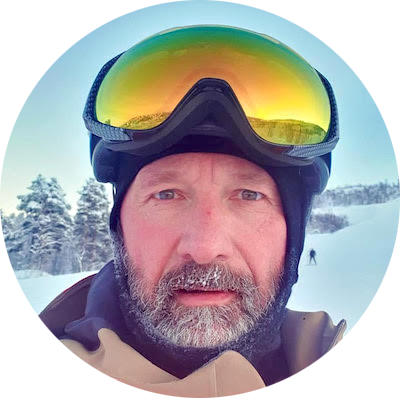
An introduction to coastal climate change Global change from anthropogenic forcing will have significant impacts at regional and coastal scales on marine systems and dependent socioeconomic systems and ecosystem services. A capacity to understand and predict these impacts, at appropriate scales, is essential for developing robust strategies for adaptation and since these areas support food production, water quality, and industrial/economic activities such as fisheries and aquaculture. Richard will present examples of coastal climate change research through the lens of the JPI CE2COAST project, which is an observation-driven synthesis of statistical and dynamical downscaling methodology to provide better process resolution and system representations that are tailored to regional and coastal domains and their associated services. Richard Bellerby is Chief Scientist, Oceans and Climate at the Norwegian Institute for Water Research, Bergen, Norway, Director of the SKLEC-NIVA Centre for Marine and Coastal Research, East China Normal University, Shanghai, China, and Adjunct Professor, Faculty of Applied Sciences, UCSI, Kuala Lumpur, Malaysia. With a background as a biogeochemist, he researches the interplay between climate and ocean change, marine ecosystems and ecosystem services with an increasing focus on socioecology. He is leader of the Arctic Monitoring Assessment Programme Ocean Acidification working group, Scientific Steering Committee member on the Integrating Climate and Ecosystem Dynamics in the Southern Ocean programme, co-lead of the IMBeR-Future Earth Coasts Continental Margins Working Group, Executive Committee member on the Global Ocean Acidification Observing Network and Activity Leader of the UN Decade OARS programme.
Véronique Camille Garçon
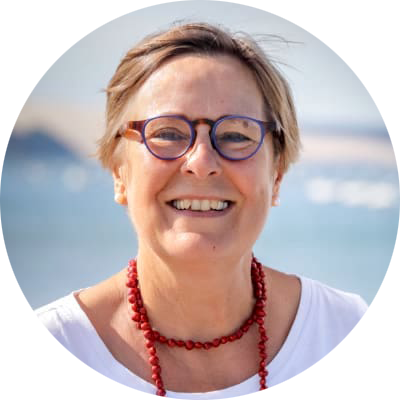
Sensitivity of South Eastern Pacific Oxygen Minimum Zone to climate change constrained by ENSO-induced oxycline variability Within the WP1-2 in CE2COAST, we estimate the mean state, variability and trends of measured temperature, salinity, nutrients, oxygen, carbonate system using existing and new project observational data in the case CE2COAST study regions. We also evaluate Earth System Models (ESM) skill against data and emergent products. Systematic bias across multiple ESMs that leads to spread in projections are identified through emergent constraint analysis. We focus our analysis here on the South Eastern Pacific (SEP), which is under the direct influence of the El Niño Southern Oscillation (ENSO), the main climate mode at interannual timescales at global scale. State-of-the-art Earth System Models diversely simulate the future of the Oxygen Minimum Zone (OMZ) of the SEP leading to a low confidence in the projection of ocean deoxygenation and of its impact on marine ecosystem services in this region. We show that, despite the strong uncertainty in ESM long-term projections of oxygen concentration, the sensitivity of the upper bound (oxycline) of the SEP OMZ to Eastern Pacific El Niño events can be used as a predictor of that of its long-term trend, which establishes an emergent constraint associated to the SEP OMZ. Applying observational constraints at 12°S to the multi-model emergent relationship allows to estimate the long-term sensitivity of oxygen to climate change. Véronique Camille Garçon is currently co-Chair of IOCCP SSG and of the GBC-GOOS panel. She graduated from University of Paris VII in Environmental Sciences and then became a post-doc fellow at MIT (Cambridge, USA). Recruited as an Early Career scientist at Centre National de la Recherche Scientifique (CNRS) in 1985, she worked at ‘Institut de Physique du Globe de Paris’ then moved down to Toulouse with a sabbatical stay at Princeton University in 1995 -1996. Her research themes aim towards understanding and quantifying processes governing fluxes of carbon, oxygen and associated biogeochemical elements in the ocean, using in situ tracers observations, remotely sensed data, coupled physical biogeochemical modeling and data assimilation technics. She served in the JGOFS SSC, member of the French IFREMER Scientific Committee for 10 years, and in many national (CNRS, National Navy,..), European (ESF, EC, EGU, ERC Panel Chair..) and international scientific instances (e.g. Chair of SOLAS). She has been acting as co-director of the International SOLAS Summer Schools in 2003, 2005, 2007 with C. Le Quéré, in 2013 with M. Dai and Director in 2009 and 2011, and of the 1st GO2NE international Summer School in 2019. She is a member of the Global Ocean Oxygen Network (GO2NE) initiated by IOC-UNESCO, involved in the GOOD UN Decade Programme and a co-Champion of the OARS UN Decade Program outcomes. She was awarded in 2017 the IOC UNESCO Anton Bruun medal. She has supervised close to 45 early career scientists (PhDs and post-docs).
Momme Butenschön
Building capacity for modelling the marine environment in European Seas under climate change The development of robust mitigation and adaptation strategies to climate change requires the capacity to understand and predict its implications for the marine environment at regional to coastal scales. Here we illustrate a range of approaches taken within the scientific community to build this capacity via the design of regional dynamically downscaled simulations based on projections of global change from the CMIP initiative, with a particular focus on the systems adopted within the CE2COAST project, aiming to streamline the existing approaches into a consistent framework of regional projections. Momme Butenschön is Deputy Director of the Ocean Modelling and Data Assimilation Division and Lead Scientist of the Earth System Modelling Research Unit at the Fondazione Centro Euro-Mediterraneo sui Cambiamenti Climatici (CMCC). He has more than 15 years of experience in the field of ocean science, has developed a range of marine ecosystem models and model systems from coastal to global applications and published more than 40 peer-reviewed scientific publications covering a wide range of topics such as physiological process studies, meta-analysis of the marine ecosystem and studies on the impact of climate change on the marine environment, food-web and ecosystem services. He is a Contributing Author of the IPCC Special Report on Ocean and Cryosphere in a Changing Climate, has taught as contract lecturer at the University of Venice Ca’Foscari within the PhD Program “Science and Management of Climate Change” and supervised master and PhD students at the universities of Bologna and Venice. Within CE2COAST he is co-leader of WP2 "Earth System Models at regional scale" and is responsible for the development of the modelling system covering the major European basins, funded by the Italian Ministry of Education, Universities and Research (MIUR).
Kirsten Isensee
Scientists v. Stakeholders : the co-production conundrum Ever since the work of scientists became publicly funded, as opposed to a pastime (or indeed a life’s work) of the well-educated and independently wealthy, there has been a requirement to bridge the often great gap between the research that is interesting to a scientist and the kind of information that stakeholders consider most valuable. Those in charge of developing policy want to both understand and direct the science to provide information relevant to policy-making. The ‘yes, but what does it all mean?’ is still often the question on the lips of stakeholders and policymakers when a scientific breakthrough is made. The CE2COAST project has been engaging with stakeholders across 6 countries in order to ensure that the downscaling of global ocean models to regional and local scales will provide information on ocean service pressures that is relevant to their concerns both in content and scale. The presentation will provide some examples of co-production from past projects as well as details on the CE2COAST efforts and illustrate how successful co-design of science and science-policy-stakeholder interactions can help to address challenges posed by anthropogenic impacts on our ocean. Kirsten Isensee has been a programme specialist at the Intergovernmental Oceanographic Commission of UNESCO since 2012. Her work focuses on ocean carbon sources and sinks, trying to distinguish the natural and anthropogenic influences on the marine environment in support of the 2030 Agenda for Sustainable Development. She provides technical assistance to activities promoting women in ocean science and facilitates collaboration between scientists, policymakers and stakeholders, via networks such as the Global Ocean Acidification Observing Network, the International Blue Carbon Initiative, the International Partnership for Blue Carbon and the Global Ocean Oxygen Network. She received her diploma and her PhD in marine biology from the University of Rostock, Germany.
Rachel Cave
Scientists v. Stakeholders : the co-production conundrum Rachel Cave has been Lecturer in Chemical Oceanography at the National University of Ireland, Galway since 2004. Since then she has taken more than 250 undergraduates and postgraduate students to sea for training in sensing and sampling in ocean waters. Her research interests are in marine biogeochemistry, with current research projects on ocean acidification and climate change, and cycling of nutrients and trace metals in estuarine, coastal and open ocean waters. She was responsible for setting up the first laboratory in Ireland capable of making high quality measurements of ocean acidification parameters and has been researching ocean acidification in Irish coastal and offshore waters since 2008 and is now starting new research into blue carbon. She received her PhD in marine chemistry from the University of Southampton, UK and carried out post-doctoral research on the impacts of river catchments on coastal water at the University of East Anglia, UK.
Moderator
Willem De Moor
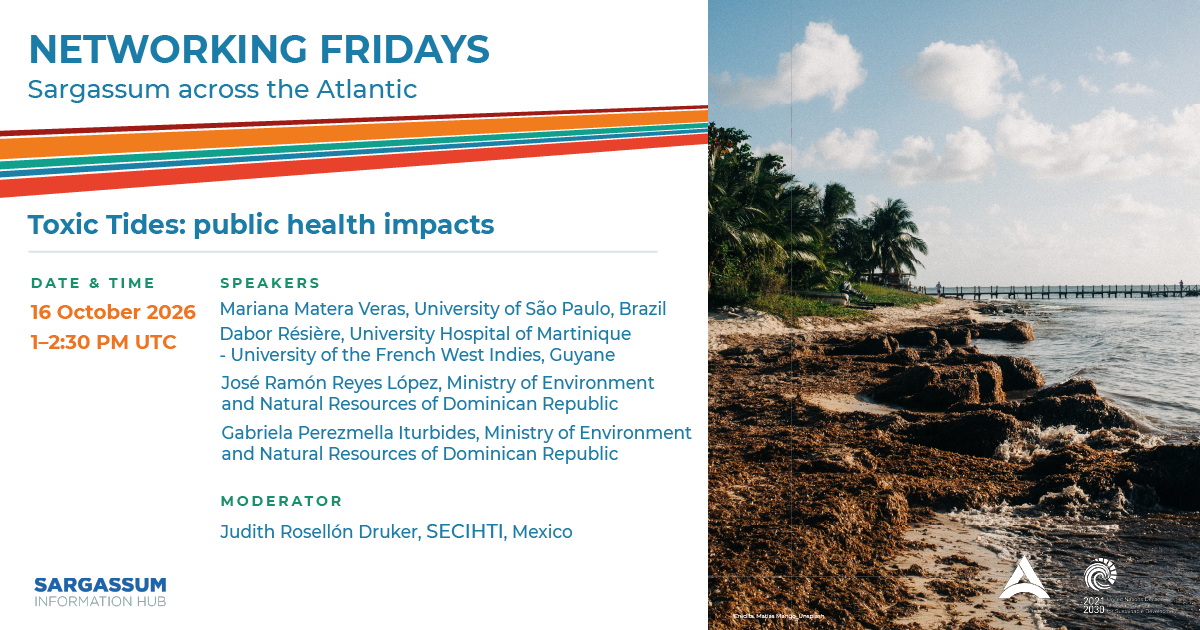
Willem De Moor is Deputy Director at the secretariat of the Joint Programming Initiative for Healthy and Productive Seas and Oceans (JPI Oceans). JPI Oceans is an intergovernmental platform that strives to increase the impact of national investments in marine and maritime research and innovation. By joining forces, JPI Oceans focuses on long-term collaboration between EU Member States, Associated Countries and international partners. The platform provides its member countries with a shared voice, strategic agenda and action plan to address complex ocean-related societal challenges that cannot be solved at national level. Before joining the JPI Oceans secretariat Willem worked as a policy adviser at the Flemish Ministry for Economy, Science and Innovation. We will continue with the Networking Fridays during the next months. More information about future sessions as well as presentations and videos from previous sessions can be found here. Twitter Hashtag: #netfridays. Expect some very exciting afternoons, or mornings or evenings, depending on where you are… If you need any additional information please send an email to Jose Luiz Moutinho. Networking Friday with Argyro Kavvada (NASA), who reviewed innovative Earth observation solutions for the Sustainable Development Goals. This session was moderated by Samy Djavidnia. Networking Friday Special Thematic Session on Evolving and Sustaining Ocean Best Practices with Jay Pearlman, Pier Luigi Buttigieg, Rachel Przeslawski, Juliet Hermes, and Alison Clausen. this session was moderated by Frank Muller-Karger Networking Friday Special Session on Sargassum with Cesar Toro (IOCARIBE of IOC-UNESCO), Karima Degia (UWI), Sandra Ketelhake (AtlantOS, KDM), Isabel Sousa Pinto (CIIMAR, GEO MBON), and Leah Mupas Segui (GEO Blue Planet Initiative). The moderator was Emily Smail (NOAA, GEO Blue Planet Initiative).
Ponentes
Richard Bellerby
Véronique Camille Garçon
Momme Butenschön
Kirsten Isensee
Rachel Cave
Willem De Moor